
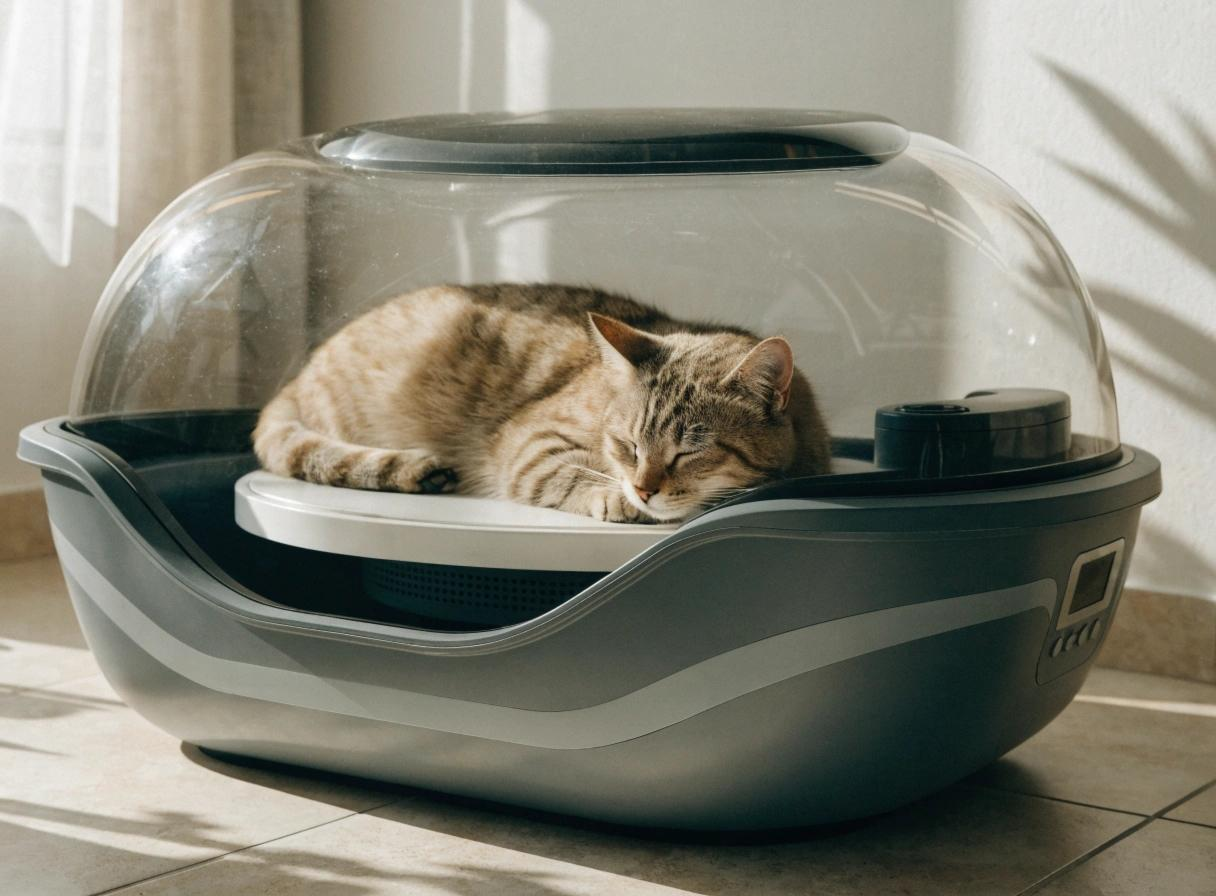
Why Is My Cat Laying in the Litter Box? 9 Common Reasons

About the Author
If your cat is repeatedly straining or producing little to no urine, seek emergency veterinary care, especially if the cat is male. If your cat is relaxed and passing normal urine and stool, lying in a clean litter box may reflect security, stress, kitten behavior, territorial pressure, pregnancy, or difficulty getting in and out. A new or repeated pattern still deserves attention. Watch one complete visit before moving your cat: note posture, time in the box, urine clump size, stool, appetite, thirst, energy, grooming, and any recent household change. The first decision is whether the cat is resting or trying to eliminate and failing. ● Often harmless A relaxed cat resting in a clean box. She is eating and eliminating normally, and is often a kitten or a new arrival. ● Worth watching New or repeated resting, or a cat that seems to want a private, scent-marked space of its own. ● Emergency now Repeated straining that produces little or no urine. Crying, a swollen or painful belly, or sudden weakness. ● Male cats A male cat straining and passing nothing can be a urethral blockage. Do not wait overnight. Is Your Cat Resting or Trying to Use the Litter Box? Watch one complete visit before lifting your cat out. A resting cat may lie loosely, breathe normally, and leave without repeated attempts. Possible trouble may look subtler: a tense or hunched posture, repeated squatting, genital licking, crying, frequent returns, vomiting, weakness, or little to no urine. The absence of dramatic behavior does not rule out illness. Veterinary descriptions of feline lower urinary tract disease include repeated straining, frequent visits, discomfort, and small amounts of urine. Owners may mistake urinary straining for constipation, so confirm whether urine is actually being produced. Little to no urine is an emergency. Scoop the tray first so you are reading fresh evidence. Then keep a rough tally through the day. How often does she go in? What comes out each time? Pay attention to the clump sizes, whether the stool looks normal, and how long she stays put. Watch for these patterns: Normal urine and stool are produced, and the cat leaves comfortably. Repeated visits produce only tiny clumps or no visible urine. The cat cries, strains, licks the genital area, vomits, or becomes weak. The abdomen appears swollen or painful. Emergency warning: Repeated straining with little or no urine can signal a urethral obstruction. Cornell Feline Health Center's guidance on feline lower urinary tract disease describes this as a life-threatening emergency, especially in male cats. Go to a vet immediately rather than waiting to see if it passes. What to Do Today Use this checklist to decide whether brief monitoring is reasonable or veterinary care is needed. Step What to do Warning signs 1. Watch one visit Observe without moving your cat. Repeated squatting, crying, restlessness, or genital licking 2. Check output Scoop first, then confirm normal urine and stool. Tiny clumps, no urine, hard stool, diarrhea, blood, or repeated attempts 3. Note changes Record visits, time in the box, clump size, appetite, thirst, energy, and grooming. Anything clearly different from normal 4. Clean the box Remove urine, stool, and damp litter. Waste on the coat or paws; red or sore skin 5. Offer another resting spot Place a box, bed, carrier, or cave nearby with a familiar blanket. The cat keeps returning to the litter 6. Review recent changes Consider visitors, noise, new pets, moved furniture, schedule, or litter changes. Hiding, reduced play, poor appetite, or increased nervousness 7. Watch other pets Look for staring, following, blocking, chasing, or waiting near the box. Guarding or one cat controlling routes and resting places 8. Spread out resources Place boxes, food, water, beds, scratchers, and perches in separate areas. The cat waits for another pet to leave 9. Call your veterinarian Arrange an exam if the behavior is new, persistent, or paired with other changes. Vomiting, weakness, pain, weight loss, mobility trouble, or altered urination 9 Reasons Your Cat May Be Laying in the Litter Box Where she lies down tells you almost nothing by itself. The useful move is to line up how she looks, what she leaves in the tray, and how she is eating against anything that has recently changed at home. 1. The Litter Box Feels Safe and Familiar The box carries a heavy concentration of your cat's scent. High sides, a hood, or a tucked-away spot can also make it feel sheltered when the rest of the home feels exposed. Offer a clean enclosed option nearby instead, such as a cardboard box, a carrier, or a cat cave lined with a blanket that already smells like your cat. 2. Your Kitten Is Exploring or Still Adjusting A kitten or newly adopted cat may treat a clean box as a familiar, scent-marked place to sit or sleep. Provide a separate covered bed, carrier, or cardboard box nearby and keep monitoring. Contact a veterinarian if the behavior is persistent or appears with appetite loss, diarrhea, straining, low energy, vomiting, or poor growth. 3. Your Cat Wants a Scent-Marked Space of Its Own A cat may ignore shared beds and choose the litter box because it smells distinctly familiar and feels privately owned. Place a clean cave, carrier, or covered bed beside the chosen box with a familiar blanket. Once the cat uses it consistently, move it gradually to a cleaner, quieter location. 4. Stress or a Household Change Has Made Your Cat Feel Unsafe A move or houseguests can do it. So can construction noise, a new baby, a new pet, or any real break in routine. Appetite changes, less play, and spraying often turn up at the same time. The veterinary authors of VCA's guidance on litter-box behavior suggest reviewing recent household changes, where the box sits, and how the pets get along. 5. Another Pet Is Creating Subtle Territorial Pressure Pressure between cats is usually quiet. One cat will stare, or trail the other from room to room, or park itself in a doorway, or wait by the tray, or simply commandeer the best beds, and a fight never actually breaks out. The cat on the receiving end falls back on the one place it feels it controls. Keep watch yourself, or leave a camera running, and scatter the resources so no single cat can sit on top of them all: food in one place, water in another, beds and scratching posts and trays spread around the home. 6. Urinary Discomfort Is Creating Urgency Urinary discomfort is one of the more urgent explanations. Inflammation, stones, infection, and urethral obstruction are different conditions, but they may share observable signs such as frequent visits, straining, genital licking, crying, or small urine clumps. Repeated attempts that produce little to no urine are an emergency. Do not wait for vomiting, collapse, or severe weakness before acting. 7. Constipation, Diarrhea, or Digestive Illness Is Keeping Your Cat Nearby Constipation may cause repeated squatting, discomfort, and small or hard stools. Diarrhea can cause urgency and frequent trips. Because urinary straining is easy to mistake for constipation, confirm what is being produced and arrange veterinary assessment for ongoing straining, vomiting, appetite loss, dehydration, blood, or marked lethargy. 8. Pain, Weakness, Illness, or Mobility Problems Make Leaving Difficult High sides, narrow entrances, or slippery flooring may be difficult for a cat with arthritis, injury, weakness, or poor balance. Offer a stable, spacious box with an accessible entrance and a clear route. New stiffness, weakness, or mobility change still needs veterinary assessment; a different box does not treat the cause. 9. A Life-Stage Change Is Affecting Behavior Life-stage changes can alter where a cat rests. A pregnant queen may seek a protected nesting site, while an older cat with pain, weakness, or cognitive change may become disoriented or stay close to familiar resources. Provide an appropriate nesting or resting area and arrange veterinary assessment for new behavior, especially when elimination, appetite, mobility, or awareness also changes. How to Tell Stress From Sickness These clues point you toward a next step, but none of them is a diagnosis. A bright, playful cat can still be unwell. Stress, meanwhile, does not always arrive with a reason attached. Leans toward stress Leans toward illness Started after a move, new pet, guest, or noise Started with no obvious household change Appetite, energy, urine, and stool stay normal Appetite drops, energy falls, or output changes Cat settles when the home is calm and quiet Straining, crying, vomiting, or genital licking Behavior eases as routine returns Signs persist or worsen over hours to days Stress and illness can also occur together. Stress can contribute to urinary signs in susceptible cats, while an ill cat may hide because it feels vulnerable. When in doubt, treat output changes and straining as the more urgent signal. Give Your Cat a Safer Place to Own What your cat may really want is a private resource that carries its own scent, not another generic bed. This is part of smarter, cleaner everyday cat care, and a few small moves usually beat buying one more bed: Place the alternative beside the chosen litter box at first. Offer both enclosed and open options to test your cat's preference. Keep a familiar blanket or towel in the mix rather than washing every bed on the same day. Provide vertical perches as well as floor-level hiding spaces. Give every cat its own resources: a place to rest, eat, scratch, drink, and toilet. Never haul her out or punish her for going back to the box. Move the new resting place gradually once the cat begins using it. If a covered box is being used mainly as a cave, provide a separate enclosed hide first, then trial the hood off while making sure the cat still uses the box to eliminate. Owners often report that the missing feature was simply a space that felt personally owned. Look for Subtle Tension in a Multi-Cat Home Cats may groom and play together while still competing over space. One cat may take the best beds, wait near the litter-box entrance, or stare and follow another without any open fighting. Do not cluster food, water, beds, and trays in one corner. A narrow hallway or doorway can become a checkpoint that one cat controls. Aim for one box per cat plus one extra, and place them in separate locations with more than one approach route. An automatic cat litter box may reduce waste accumulation after successful cycles, but it cannot solve guarding or replace enough dispersed boxes. Special Considerations for Kittens, New Cats, Seniors, and Pregnant Cats Cat Possible explanation Best response Kitten Exploration, immature hygiene, or insecurity Monitor elimination and watch for diarrhea, straining, or low energy. Newly adopted cat Familiar scent and a protected location feel safer Use a quiet adjustment room with separate hiding and sleeping spaces. Senior cat Arthritis, weakness, confusion, or difficulty leaving the tray Offer a large low-entry box and arrange a health assessment. Pregnant cat Nesting or more frequent urination Provide a clean nesting box away from waste and seek veterinary guidance. Recently ill cat Weakness, dehydration, and lingering pain or urgency can all keep her close to the box. Call the clinic if the behavior is new or will not settle. Contact the veterinary clinic if the behavior is new or persistent. Is Lying in the Litter Box Unhygienic? Resting in clean litter is less concerning than lying in a tray contaminated with urine or feces, but repeated contact can soil the coat and irritate the skin. Remove waste promptly and offer a clean resting place beside the box. An automatic box may reduce how long waste remains after a successful cycle, but it does not replace inspection, cleaning, or veterinary evaluation. Cat stool can carry bacteria and parasites, so remove feces promptly, wash your hands after handling litter, and keep food-preparation items away from the box. Pregnant or immunocompromised people should follow their healthcare professional's litter-handling advice. A few practical habits reduce contact with waste: Get urine and stool out quickly, and when the litter is badly soiled, change the whole lot. Run a hand over her paws, her belly, and under her tail for anything stuck. For a little residue, a damp cloth does the job, or use a wipe that says it is safe for cats. Keep household disinfectants and bleach off her coat entirely, along with scented sprays and any essential oil. Ring your vet if the skin turns red or swollen, feels sore, stays damp, or starts losing hair. A young kitten that has not yet learned to bury its stool or groom right after may simply still be learning. Weigh that on its own, apart from the lying-down question. When to Contact a Veterinarian ⚠ Do not wait overnight: Brief monitoring may be reasonable only when your cat is relaxed, eating normally, and passing normal urine and stool. Call your veterinarian when the behavior is new, recurrent, persistent, or paired with appetite, energy, mobility, urine, or stool changes. Repeated straining with little to no urine is an emergency, especially in male cats. Seek immediate veterinary care rather than waiting to see whether it passes. Other urgent signs include collapse, difficulty breathing, repeated vomiting, sudden severe weakness, a painful or swollen abdomen, or inability to stand. FAQs Why Is My Cat Sitting in the Litter Box Doing Nothing? Usually because it smells overwhelmingly of her and sits somewhere quiet and closed-in, which she finds comforting. Before you write it off as ordinary resting, watch one full visit and confirm she passes urine or stool normally, with no straining. What Are Four Signs That a Cat May Be Suffering? The four that matter most are a fading appetite, hiding away or unusual flatness, any struggle to breathe or move, and litter-box habits that have turned painful or strange. Subtler ones count as well. She may groom less, hesitate to jump, or flinch from being touched. Is It Normal for Cats to Lay in Litter Boxes? A brief one every so often is normal enough in kittens and cats still settling in. What earns a closer look is the version that is new, or keeps happening, because that can trace back to stress or to something wrong in the bladder or gut. Can Another Cat Make My Cat Feel That the Litter Box Is the Only Space It Owns? Yes. It rarely looks like aggression. A long stare, a body blocking the doorway, a quiet vigil near the tray, or simple ownership of the best beds can all lean on another cat, even a cat it grooms and plays with. Spreading the resources out around the house lifts that weight. Is My Cat Sick if It Sits in the Litter Box? Not on its own, no. It becomes more concerning when the resting arrives with other shifts, a fading appetite, low energy, vomiting, patchier grooming, or a change in how she urinates. Is My Cat Stressed or Sick? Lean toward stress if it followed something disruptive, a house move perhaps, or a new pet, and her appetite and litter habits are otherwise unchanged. Lean toward illness once she starts straining, barely urinating, vomiting, or going off her food. Neither picture is proof by itself. When Is Lying in the Litter Box an Emergency? Seek emergency care for repeated straining with little to no urine, difficulty breathing, collapse, sudden severe weakness, repeated vomiting, a painful or swollen abdomen, or inability to stand. A cat that is simply resting but has a new or persistent pattern should still be assessed when appetite, energy, mobility, urine, or stool changes. Sources Tammy Hunter, DVM, and Ernest Ward, DVM, VCA Animal Hospitals — Cystitis and Lower Urinary Tract Disease in Cats Feline health faculty, Cornell Feline Health Center, Cornell University College of Veterinary Medicine — Feline Lower Urinary Tract Disease Courtney Barnes, BSc, DVM; Malcolm Weir, DVM, MSc, MPH; and Ernest Ward, DVM, VCA Animal Hospitals — Constipation in Cats Veterinary behavior team, VCA Animal Hospitals — Cat Behavior Problems: House Soiling Feline health faculty, Cornell Feline Health Center — Cognitive Dysfunction Veterinary editorial team, International Cat Care — Choosing a Litter Tray for Your Cat
|
● Often harmless
|
A relaxed cat resting in a clean box. She is eating and eliminating normally, and is often a kitten or a new arrival.
|
|
● Worth watching
|
New or repeated resting, or a cat that seems to want a private, scent-marked space of its own.
|
|
● Emergency now
|
Repeated straining that produces little or no urine. Crying, a swollen or painful belly, or sudden weakness.
|
|
● Male cats
|
A male cat straining and passing nothing can be a urethral blockage. Do not wait overnight.
|
Is Your Cat Resting or Trying to Use the Litter Box?
-
Normal urine and stool are produced, and the cat leaves comfortably.
-
Repeated visits produce only tiny clumps or no visible urine.
-
The cat cries, strains, licks the genital area, vomits, or becomes weak.
-
The abdomen appears swollen or painful.
|
Emergency warning: Repeated straining with little or no urine can signal a urethral obstruction. Cornell Feline Health Center's guidance on feline lower urinary tract disease describes this as a life-threatening emergency, especially in male cats. Go to a vet immediately rather than waiting to see if it passes.
|
What to Do Today
|
Step
|
What to do
|
Warning signs
|
|
1. Watch one visit
|
Observe without moving your cat.
|
Repeated squatting, crying, restlessness, or genital licking
|
|
2. Check output
|
Scoop first, then confirm normal urine and stool.
|
Tiny clumps, no urine, hard stool, diarrhea, blood, or repeated attempts
|
|
3. Note changes
|
Record visits, time in the box, clump size, appetite, thirst, energy, and grooming.
|
Anything clearly different from normal
|
|
4. Clean the box
|
Remove urine, stool, and damp litter.
|
Waste on the coat or paws; red or sore skin
|
|
5. Offer another resting spot
|
Place a box, bed, carrier, or cave nearby with a familiar blanket.
|
The cat keeps returning to the litter
|
|
6. Review recent changes
|
Consider visitors, noise, new pets, moved furniture, schedule, or litter changes.
|
Hiding, reduced play, poor appetite, or increased nervousness
|
|
7. Watch other pets
|
Look for staring, following, blocking, chasing, or waiting near the box.
|
Guarding or one cat controlling routes and resting places
|
|
8. Spread out resources
|
Place boxes, food, water, beds, scratchers, and perches in separate areas.
|
The cat waits for another pet to leave
|
|
9. Call your veterinarian
|
Arrange an exam if the behavior is new, persistent, or paired with other changes.
|
Vomiting, weakness, pain, weight loss, mobility trouble, or altered urination
|
9 Reasons Your Cat May Be Laying in the Litter Box

1. The Litter Box Feels Safe and Familiar
2. Your Kitten Is Exploring or Still Adjusting
3. Your Cat Wants a Scent-Marked Space of Its Own
4. Stress or a Household Change Has Made Your Cat Feel Unsafe
5. Another Pet Is Creating Subtle Territorial Pressure
6. Urinary Discomfort Is Creating Urgency
7. Constipation, Diarrhea, or Digestive Illness Is Keeping Your Cat Nearby
8. Pain, Weakness, Illness, or Mobility Problems Make Leaving Difficult
9. A Life-Stage Change Is Affecting Behavior
How to Tell Stress From Sickness
|
Leans toward stress
|
Leans toward illness
|
|
Started after a move, new pet, guest, or noise
|
Started with no obvious household change
|
|
Appetite, energy, urine, and stool stay normal
|
Appetite drops, energy falls, or output changes
|
|
Cat settles when the home is calm and quiet
|
Straining, crying, vomiting, or genital licking
|
|
Behavior eases as routine returns
|
Signs persist or worsen over hours to days
|
Give Your Cat a Safer Place to Own

-
Place the alternative beside the chosen litter box at first.
-
Offer both enclosed and open options to test your cat's preference.
-
Keep a familiar blanket or towel in the mix rather than washing every bed on the same day.
-
Provide vertical perches as well as floor-level hiding spaces.
-
Give every cat its own resources: a place to rest, eat, scratch, drink, and toilet.
-
Never haul her out or punish her for going back to the box.
-
Move the new resting place gradually once the cat begins using it.
Look for Subtle Tension in a Multi-Cat Home

Special Considerations for Kittens, New Cats, Seniors, and Pregnant Cats
|
Cat
|
Possible explanation
|
Best response
|
|
Kitten
|
Exploration, immature hygiene, or insecurity
|
Monitor elimination and watch for diarrhea, straining, or low energy.
|
|
Newly adopted cat
|
Familiar scent and a protected location feel safer
|
Use a quiet adjustment room with separate hiding and sleeping spaces.
|
|
Senior cat
|
Arthritis, weakness, confusion, or difficulty leaving the tray
|
Offer a large low-entry box and arrange a health assessment.
|
|
Pregnant cat
|
Nesting or more frequent urination
|
Provide a clean nesting box away from waste and seek veterinary guidance.
|
|
Recently ill cat
|
Weakness, dehydration, and lingering pain or urgency can all keep her close to the box. Call the clinic if the behavior is new or will not settle.
|
Contact the veterinary clinic if the behavior is new or persistent.
|
Is Lying in the Litter Box Unhygienic?

-
Get urine and stool out quickly, and when the litter is badly soiled, change the whole lot.
-
Run a hand over her paws, her belly, and under her tail for anything stuck.
-
For a little residue, a damp cloth does the job, or use a wipe that says it is safe for cats.
-
Keep household disinfectants and bleach off her coat entirely, along with scented sprays and any essential oil.
-
Ring your vet if the skin turns red or swollen, feels sore, stays damp, or starts losing hair.
When to Contact a Veterinarian
|
⚠ Do not wait overnight:
Brief monitoring may be reasonable only when your cat is relaxed, eating normally, and passing normal urine and stool. Call your veterinarian when the behavior is new, recurrent, persistent, or paired with appetite, energy, mobility, urine, or stool changes.
Repeated straining with little to no urine is an emergency, especially in male cats. Seek immediate veterinary care rather than waiting to see whether it passes.
Other urgent signs include collapse, difficulty breathing, repeated vomiting, sudden severe weakness, a painful or swollen abdomen, or inability to stand.
|
FAQs
Why Is My Cat Sitting in the Litter Box Doing Nothing?
What Are Four Signs That a Cat May Be Suffering?
Is It Normal for Cats to Lay in Litter Boxes?
Can Another Cat Make My Cat Feel That the Litter Box Is the Only Space It Owns?
Is My Cat Sick if It Sits in the Litter Box?
Is My Cat Stressed or Sick?
When Is Lying in the Litter Box an Emergency?
Sources
- Tammy Hunter, DVM, and Ernest Ward, DVM, VCA Animal Hospitals — Cystitis and Lower Urinary Tract Disease in Cats
- Feline health faculty, Cornell Feline Health Center, Cornell University College of Veterinary Medicine — Feline Lower Urinary Tract Disease
- Courtney Barnes, BSc, DVM; Malcolm Weir, DVM, MSc, MPH; and Ernest Ward, DVM, VCA Animal Hospitals — Constipation in Cats
- Veterinary behavior team, VCA Animal Hospitals — Cat Behavior Problems: House Soiling
- Feline health faculty, Cornell Feline Health Center — Cognitive Dysfunction
- Veterinary editorial team, International Cat Care — Choosing a Litter Tray for Your Cat
You may also like

AutoScooper 11 Litter Base Bed – 2 Pack

AutoScooper 11 Waste Bags – 60 Count

AutoScooper 11 Waterproof Replacement Liner - 2 Pack

AutoScooper 12 Lite Cat Litter Box

AutoScooper 12 Lite Cat Litter Box
Further reading
Why Is My Cat Peeing Outside the Litter Box?
Why Is My Cat Pooping on the Floor? Litter Box Causes and Next Steps