
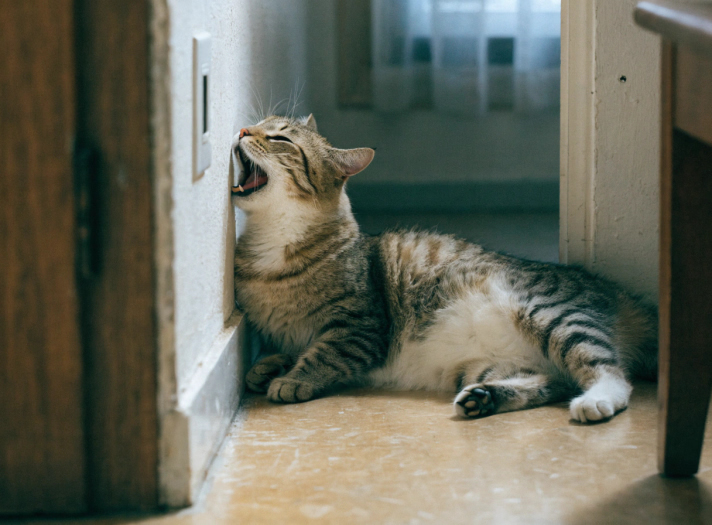
What to Do When Your Cat Is in Heat: 10 Ways to Help

About the Author
If your cat is in heat, keep her indoors, separate her from intact males, reduce outside stimulation, and give her a quiet place to rest. Home care can make the cycle safer and more manageable, but it cannot stop the hormones or prevent another cycle. Ask your veterinarian about the safest timing for spaying. Yowling, rolling, rubbing, restlessness, and raised-hindquarter posture are common signs of estrus. They are usually hormone-driven rather than proof of pain. Weakness, vomiting, difficulty breathing, urinary straining, blood, or abnormal discharge are not routine heat signs and need veterinary attention. ● Do now Keep her indoors. Then walk the house and check every door, window, screen, and cat flap, because she may turn determined about getting out. ● For comfort A quiet room with soft bedding. Short bursts of play and attention when she comes looking for it, not before. ● Never give No human medicine or sedatives. Nothing left over from another pet. Skip essential oils and herbal remedies entirely. ● Call a vet If she seems painful or weak. If you see blood or discharge. If she stops eating, vomits, or the heat never seems to end. How to Tell if Your Cat Is in Heat The behavioral change can be abrupt, so first-time owners may mistake heat for pain or illness. Typical signs include vocalizing, rolling, rubbing, restlessness, and a raised-hindquarter posture. Use the cat’s overall condition and litter-box output to distinguish routine estrus behavior from a medical problem. 1. Common Signs of a Cat in Heat Sign What it looks like Loud calling A low, drawn-out yowl that carries. Day and night. Rubbing and rolling She works her cheeks and chin along furniture, then rolls. Back-leg treading Rhythmic marching of the back paws while the rear is raised. Escape attempts Darting at open doors. Scratching screens. Sitting by the exit. Spraying or frequent urination Small amounts sprayed on walls and furniture to spread scent. Restlessness and appetite drop She paces, sleeps badly, and may ignore the bowl entirely. 2. Does a Cat Normally Bleed During Heat? No. Vaginal bleeding is not considered a normal sign of feline heat. Blood in the urine, bloody discharge, or unexplained bleeding may have another cause and should be assessed by a veterinarian, especially when accompanied by pain, weakness, repeated litter-box visits, vomiting, or a swollen abdomen. 3. Heat Behavior Versus Signs of Illness Signal Normal heat Possible illness Vocalizing Yowls while pacing or rubbing; pauses when distracted. Cries out sharply in the litter box or when touched. Urination Marks vertically, or squats and passes a normal volume. Strains, produces drops, or repeatedly visits with nothing. Energy Restless, demanding, actively moving. Lethargic, hiding, unresponsive. How Long Does a Cat Stay in Heat? Estrus often lasts several days, but duration varies and some cats remain in heat for longer. If she does not mate, signs may subside and then return after a short interval. Contact a veterinarian if the pattern is unusually prolonged, nearly continuous, or accompanied by illness. 4 Stages of Heat Cycle Duration What happens Proestrus 1–2 days She draws males in and turns affectionate, but will not mate yet. Estrus 4–7 days The loud phase. Yowling, the lordosis posture, full receptivity. Interestrus 7–14 days A rest phase if she did not mate. Anestrus Months Dormant, triggered by short winter days. Indoor cats often skip it. Outdoor cats are seasonal breeders, triggered by daylight. Indoor cats live under artificial light and steady heating, so their bodies read the whole year as one long spring and they may cycle straight through without the usual dormant break. Most queens have their first heat around six months. Some start earlier, and certain breeds can begin showing signs as early as four months old. Is a Cat in Heat in Pain? Not normally. Heat creates a powerful drive to mate, and that leaves her restless, touch-sensitive, and unable to settle for more than a few minutes. It looks like suffering. It's closer to agitation. Heat should not make a cat weak or clearly painful at rest. Seek veterinary advice for blood-tinged or foul-smelling discharge, a swollen or painful abdomen, vomiting, collapse, loss of appetite, difficulty urinating, or difficulty breathing. Some cats settle when stroked around the cheeks and shoulders, going quiet for a few minutes. Others get more wound up by the same handling and start pacing the moment you stop. Owners report both, so test it rather than assuming. If she stiffens up, lifts her back end, or leaves the room, stop, and avoid touching near the tail base, since it triggers the mating posture and tends to wind her up further. 10 Ways to Help a Cat in Heat Safely Note: None of this shortens the cycle. It keeps her safe and makes the week manageable, and most of it is worth keeping in your everyday cat care routine year-round. 1. Keeping her indoors She is fertile now, and a single brief encounter with an intact male is all it takes, which is why a cat who has ignored the front door her entire life will suddenly push past your legs or work at a window screen. Use a secure carrier any time she leaves the house. 2. Check every possible escape route Walk the house and look for the gap you stopped noticing years ago. A screen torn at the corner. The cat flap that never locked properly. Anything that does not latch on its own. Tell everyone to look down before opening an exterior door, because males may already be gathering outside once they catch her scent. 3. Separate her from male cats A closed door, not a baby gate. Mating takes seconds. Cats Protection notes females in heat go looking for males rather than waiting. A neutered male is a different problem: he cannot get her pregnant, but he may chase, mount, and keep her from resting. Separate them for a few days. 4. Create a quiet, low-trigger room Pick one calm room at the back of the house, away from the front door and the busiest hallway. She needs her litter box in there, water, something soft to sleep on, and whichever toys she already likes. Draw the curtains if outdoor cats are visible. Some cats settle in a small predictable space while others get more upset shut away, so watch which one you have. 5. Pay attention only when she asks for it Let her come to you. She will make it obvious when she has had enough by stiffening up, flicking her tail, getting louder, or raising her hindquarters. 6. Distract her through playing for short periods of time Several short play sessions with a wand toy or ball can redirect some restless energy. A brief session before the evening meal may help her settle, but stop if play increases agitation. 7. Offer soft bedding and supervised warmth A covered bed or pet-safe pad on its lowest setting may help. Heat only part of the bed so she can move away, and never leave it running unsupervised. Plenty of cats ignore it entirely. 8. Stick to the same routine when it comes to food, drink, and timing Hold mealtime, playtime, and quiet time where they normally sit, since a cat already unsettled by hormones does not need her day rearranged as well. Watch how much she is eating and drinking. Call a vet if she stops eating or looks weak. 9. Keep her litter box and spraying area clean Scoop at least daily, clean marked areas with an enzyme cleaner, and add another box if she begins avoiding the first. If daily scooping is difficult, an automatic cat litter box can reduce waste buildup between checks, but it should not replace monitoring. Repeated visits, straining, or little to no urine require veterinary attention. Never punish spraying. 10. Reduce her exposure to stimuli from other cats Seeing or hearing a male outside intensifies calling and escape attempts. Close curtains, move furniture from windows, run white noise, and wash mats near entrances. How to Calm a Cat in Heat at Night Nighttime vocalizing can feel more intense because the home is quiet and outdoor cats may be active. A predictable bedtime routine may help her settle for short periods, but it will not switch off the hormones. Prepare the room before bed Prepare the room before the household settles. Scoop the box, provide fresh water and her evening meal, and leave soft bedding plus a safe place to hide or perch. Keep the route to the litter box clear and confirm that she is passing normal amounts of urine and stool. Decide whether company or a private room helps more Try two short approaches and watch her response: calm company with gentle head-and-cheek contact, then quiet time in a separate room. Continue whichever lowers agitation and stop if she becomes louder, tense, or unable to settle. A private room should never be punishment; it must be secure, ventilated, and supplied with water, bedding, and a clean litter box. Take care of your own sleeping while not punishing your cat Protect your own sleep without punishing your cat. Use white noise, close the bedroom door if she has a safe alternative room, and share nighttime checks when possible. She is not vocalizing deliberately, and shouting or spraying water will increase stress without changing the heat cycle. What if your cat cannot get spayed right now? Spaying may be delayed by appointment availability, cost, pre-operative test results, current illness, or veterinarian-assessed anesthesia risk. While you wait, focus on secure indoor care, comfort, and accurate monitoring. Tell the clinic when the heat signs started and ask whether the existing appointment should remain in place. Delay, postponement, and financial problems Ask whether to keep the original appointment if she enters heat first, and do not cancel without speaking to them. Keep a record of when signs began and whether she ate normally. For cost, call early: shelters, mobile clinics, and teaching hospitals run waitlists. Ask the clinic whether surgery during heat is appropriate Sometimes yes, though increased blood flow raises bleeding risk, so practice varies. Ask whether the surgeon operates during heat, whether there is an added fee, and whether to keep the appointment. Never use leftover hormone products or sedatives while you wait. Do Catnip, Warmth, Music, or Calming Products Help? A few of these settle a cat for a while. None of them stop an active cycle. Change one thing at a time so you can actually tell which one is doing anything. Method What to know Catnip It relaxes some cats and winds up others. Offer a little once, then stop if the pacing or yowling gets worse. Warm bed or pad Pet-safe only, lowest setting, and heat just one end so she can move off it. Calming music or white noise Useful for masking outdoor cats. It does nothing to the cycle itself. Pheromone diffuser May take the edge off general stress. Fertility and hormones are untouched. Herbal products Not without asking your vet first, since strength and ingredients vary wildly. Human medication Never. What is safe in a human medicine cabinet can poison a cat, and that includes ordinary antihistamines and pain relievers. Skip essential oils entirely. ASPCA guidance explains that concentrated oils harm cats through skin contact, ingestion, or licking residue from fur, and household products safe for people are frequently not safe for pets. What not to do when your cat is in heat Letting her outside to “get it over with” is how pregnancy happens. Punishment does nothing. Shouting, water spray, and rough handling will not shift a hormonal cycle. Any temporary room has to be ventilated and stocked. Water, bedding, litter box. No human antihistamines or sedatives, and nothing hormonal left over from another pet. Pressing hard on her lower back does not work and may hurt her. Never leave a heating pad running unsupervised. Blood or discharge is never just part of the cycle. How Do You Prevent Escape and Pregnancy? Pregnancy prevention is the first priority. A cat that normally ignores the front door may become single-minded about reaching a male. Bring her in and keep her away from all males. Check for wounds, limping, or breathing trouble. Tell the clinic when she escaped, how long she was out, whether an intact male was around, and whether she has a spay appointment booked. Cats Protection notes that owners often do not know mating occurred until pregnancy signs appear, so early advice matters. Spaying and Long-Term Prevention Spaying removes the ovaries, which ends the hormone cycle that drives heat. VCA guidance on spaying covers what the procedure involves and its long-term benefits. Cats do not need to experience a heat cycle before being spayed. Ask your veterinarian about timing based on age, health, weight, current heat status, and the clinic's surgical policy. Rarely, a small piece of ovarian tissue is left behind and keeps producing hormones. Merck describes this as ovarian remnant syndrome. A spayed cat showing repeated heat behavior needs a veterinary workup, not reassurance. When to Contact a Veterinarian Arrange veterinary advice Seek prompt care Heat signs continue much longer than expected Trouble breathing Cycles repeat with little or no clear break Collapse or inability to stand A spayed cat shows repeated heat behavior Blood or foul-smelling discharge She escaped and may have mated Clear pain or a swollen abdomen You need help planning or timing spaying Refusal to eat or drink FAQs How can I get my cat out of heat? You cannot safely end a heat cycle at home. Keep her indoors, separate her from intact males, reduce outside triggers, and provide a quiet resting area. Spaying is the reliable long-term way to prevent future heat cycles; ask the clinic about timing. Will catnip calm a cat in heat? It relaxes some cats and excites others. Test a small amount once and stop if pacing or vocalizing gets stronger. It does not shorten heat or prevent pregnancy. How long does cat heat last? About a week. Some cats run a few days, others closer to two weeks, and if she does not mate the whole thing tends to come back after a short break. How do I stop a cat in heat from meowing at night? You may not stop it completely. Play before the evening meal, close curtains, run white noise, and prepare the sleeping area in advance. Never shout or spray water. Should I touch my cat when she is in heat? Yes, when she seeks it out and seems relaxed. Stick to the cheeks, head, and shoulders, and stop if she gets louder or swats. Touching near the tail base triggers the mating posture. What can I do while waiting for her spay appointment? Keep her strictly indoors and secure every exit you can find. Intact males stay behind a closed door. Ring the clinic if she comes into heat, gets unwell, or may have mated. Can a cat be spayed while in heat? Sometimes, but the decision is veterinarian- and clinic-dependent because tissues may have increased blood flow during heat. Do not cancel or reschedule on your own. Call the clinic, explain when signs began, and follow its instructions about timing, fasting, cost, and surgical risk. Sources Veterinary editorial team, PetMD, Cat in Heat: signs, duration, and whether it causes pain Ernest Ward, DVM, and veterinary staff, VCA Animal Hospitals, Estrus Cycles in Cats: stages, timing, and behavioral signs Veterinary staff, VCA Animal Hospitals, Spaying in Cats: procedure and long-term prevention Feline welfare team, Cats Protection, Cat Reproduction: fertility, mating, and pregnancy signs Veterinary editorial team, Merck Veterinary Manual, Management of Reproduction of Cats: risks of hormonal suppression Animal Poison Control team, ASPCA, Essential Oils Around Pets: exposure risks in cats
|
● Do now
|
Keep her indoors. Then walk the house and check every door, window, screen, and cat flap, because she may turn determined about getting out.
|
|
● For comfort
|
A quiet room with soft bedding. Short bursts of play and attention when she comes looking for it, not before.
|
|
● Never give
|
No human medicine or sedatives. Nothing left over from another pet. Skip essential oils and herbal remedies entirely.
|
|
● Call a vet
|
If she seems painful or weak. If you see blood or discharge. If she stops eating, vomits, or the heat never seems to end.
|
How to Tell if Your Cat Is in Heat
1. Common Signs of a Cat in Heat
|
Sign
|
What it looks like
|
|
Loud calling
|
A low, drawn-out yowl that carries. Day and night.
|
|
Rubbing and rolling
|
She works her cheeks and chin along furniture, then rolls.
|
|
Back-leg treading
|
Rhythmic marching of the back paws while the rear is raised.
|
|
Escape attempts
|
Darting at open doors. Scratching screens. Sitting by the exit.
|
|
Spraying or frequent urination
|
Small amounts sprayed on walls and furniture to spread scent.
|
|
Restlessness and appetite drop
|
She paces, sleeps badly, and may ignore the bowl entirely.
|
2. Does a Cat Normally Bleed During Heat?
3. Heat Behavior Versus Signs of Illness
|
Signal
|
Normal heat
|
Possible illness
|
|
Vocalizing
|
Yowls while pacing or rubbing; pauses when distracted.
|
Cries out sharply in the litter box or when touched.
|
|
Urination
|
Marks vertically, or squats and passes a normal volume.
|
Strains, produces drops, or repeatedly visits with nothing.
|
|
Energy
|
Restless, demanding, actively moving.
|
Lethargic, hiding, unresponsive.
|
How Long Does a Cat Stay in Heat?

|
4 Stages of Heat Cycle
|
Duration
|
What happens
|
|
Proestrus
|
1–2 days
|
She draws males in and turns affectionate, but will not mate yet.
|
|
Estrus
|
4–7 days
|
The loud phase. Yowling, the lordosis posture, full receptivity.
|
|
Interestrus
|
7–14 days
|
A rest phase if she did not mate.
|
|
Anestrus
|
Months
|
Dormant, triggered by short winter days. Indoor cats often skip it.
|
Is a Cat in Heat in Pain?
10 Ways to Help a Cat in Heat Safely

|
Note: None of this shortens the cycle. It keeps her safe and makes the week manageable, and most of it is worth keeping in your everyday cat care routine year-round.
|
1. Keeping her indoors
2. Check every possible escape route
3. Separate her from male cats
4. Create a quiet, low-trigger room
5. Pay attention only when she asks for it
6. Distract her through playing for short periods of time
7. Offer soft bedding and supervised warmth
8. Stick to the same routine when it comes to food, drink, and timing
9. Keep her litter box and spraying area clean

10. Reduce her exposure to stimuli from other cats
How to Calm a Cat in Heat at Night

-
Prepare the room before bed

-
Decide whether company or a private room helps more
-
Take care of your own sleeping while not punishing your cat
-
What if your cat cannot get spayed right now?
-
Delay, postponement, and financial problems
-
Ask the clinic whether surgery during heat is appropriate
Do Catnip, Warmth, Music, or Calming Products Help?
|
Method
|
What to know
|
|
Catnip
|
It relaxes some cats and winds up others. Offer a little once, then stop if the pacing or yowling gets worse.
|
|
Warm bed or pad
|
Pet-safe only, lowest setting, and heat just one end so she can move off it.
|
|
Calming music or white noise
|
Useful for masking outdoor cats. It does nothing to the cycle itself.
|
|
Pheromone diffuser
|
May take the edge off general stress. Fertility and hormones are untouched.
|
|
Herbal products
|
Not without asking your vet first, since strength and ingredients vary wildly.
|
|
Human medication
|
Never. What is safe in a human medicine cabinet can poison a cat, and that includes ordinary antihistamines and pain relievers.
|
|
What not to do when your cat is in heat
|
|
How Do You Prevent Escape and Pregnancy?

Spaying and Long-Term Prevention
When to Contact a Veterinarian
|
Arrange veterinary advice
|
Seek prompt care
|
|
Heat signs continue much longer than expected
|
Trouble breathing
|
|
Cycles repeat with little or no clear break
|
Collapse or inability to stand
|
|
A spayed cat shows repeated heat behavior
|
Blood or foul-smelling discharge
|
|
She escaped and may have mated
|
Clear pain or a swollen abdomen
|
|
You need help planning or timing spaying
|
Refusal to eat or drink
|
FAQs
How can I get my cat out of heat?
Will catnip calm a cat in heat?
How long does cat heat last?
How do I stop a cat in heat from meowing at night?
Should I touch my cat when she is in heat?
What can I do while waiting for her spay appointment?
Can a cat be spayed while in heat?
Sources
- Veterinary editorial team, PetMD, Cat in Heat: signs, duration, and whether it causes pain
- Ernest Ward, DVM, and veterinary staff, VCA Animal Hospitals, Estrus Cycles in Cats: stages, timing, and behavioral signs
- Veterinary staff, VCA Animal Hospitals, Spaying in Cats: procedure and long-term prevention
- Feline welfare team, Cats Protection, Cat Reproduction: fertility, mating, and pregnancy signs
- Veterinary editorial team, Merck Veterinary Manual, Management of Reproduction of Cats: risks of hormonal suppression
- Animal Poison Control team, ASPCA, Essential Oils Around Pets: exposure risks in cats


