
Are Automatic Litter Boxes Safe? Sensors, Red Flags, and Safety

About the Author
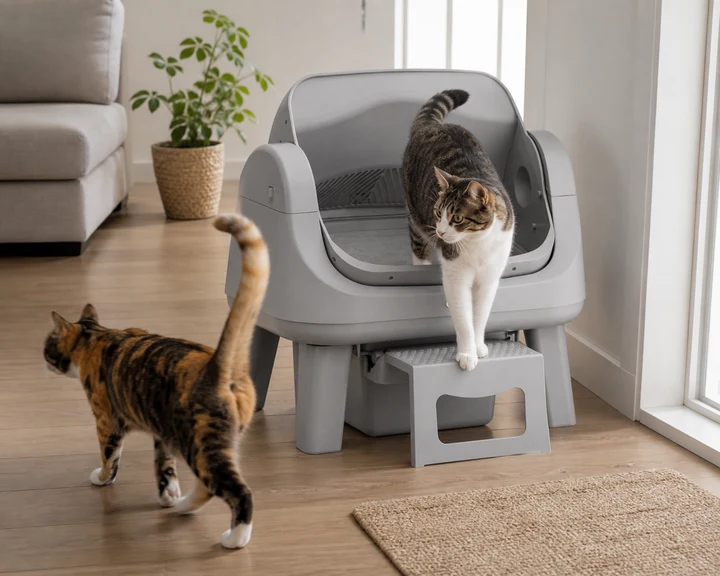
Automatic litter boxes are safe for most cats, as long as the box is designed right. A good one detects your cat before the cleaning cycle starts, waits until the cat walks away, stops if the cat comes back mid-cycle, and keeps the exit open the whole time. If your cat fits the model's size and weight range, you have covered the basics. Not every cat is a good match, though. Kittens, seniors, large breeds, anxious cats, and cats with joint pain all need closer attention, and some are better off with a plain box. No single sensor makes any machine risk-free. Safety comes from how the box is designed, whether you set it up and maintain it right, and how comfortably your own cat uses it. Understanding How Automatic Litter Boxes Work To judge whether a self-cleaning box is safe, it helps to know how it moves. The risk in any unit comes down to its mechanical movement and how reliably its sensors pause that movement when a cat is present. 1. Raking Systems A raking box uses a motorized comb that travels across a flat litter bed, pushing waste into a sealed compartment. The rake moves along exposed tracks, so clumps stuck to the bottom can stall it mid-cycle. Because the comb applies force across the whole tray, the box must confirm that no cat is inside or stepping in before the sweep starts, or it risks catching a paw or tail. 2. Rotating or Sifting Systems A rotating box uses a drum or globe that tilts and spins, letting gravity and internal screens sift waste into a bottom drawer. As the globe turns, the entryway shifts, which, in some designs, can partially or fully close the exit. A unit without an always-open entry can trap a cat if the globe rotates while occupied, so the machine has to stop the instant a cat approaches, steps on the ledge, or climbs in mid-cycle. 3. Sensors Control When Cleaning Starts Self-cleaning boxes rely on sensors to start the countdown and pause a cycle. Weight sensors under the base read the change as a cat steps in or out. Motion sensors catch movement near the entrance. Infrared beams trigger when a cat breaks the path, and better models stack all three. The real question is not whether a box has sensors. It is what it does the instant they fire: a reliable machine aborts the cycle, resets the timer, and keeps the exit clear until the cat leaves. Safety Features That Actually Matter "Smart sensors" sounds reassuring, but the label alone tells you little. What matters is what the box detects, what it does when it finds your cat, and whether it stops when something goes wrong. A box built around those features is easier to trust. The AutoScooper 12 Lite cat litter box is one example: a low entry step, and a cleaning cycle that runs after the cat leaves. Here is what to look for. What to check Safer starting point Cat detection Uses reliable sensors to detect a cat inside or nearby before a cycle starts Cleaning cycle Starts only after the cat has left, with a short delay built in Re-entry Pauses or stops if the cat returns during cleaning Entrance Stays open enough for the cat to leave at any point in the cycle Weight limit Publishes a clear minimum weight your cat must meet Size fit Gives your cat room to enter, turn, dig, and exit comfortably Cat-Presence Detection The box should know when your cat is inside or close to the cleaning area before a cycle begins. Do not settle for a page that only says “safety sensors.” Check what the sensors detect, and whether they keep the mechanism still while your cat is there. Delayed Cleaning A safer box does not start the moment your cat steps out. A short delay gives the cat time to leave and gives the sensors another chance to catch them if they turn back. The exact delay varies by model, so read the manual rather than assuming they all behave the same. Stop-on-Re-entry Protection Cats are curious, and some walk back when they hear the box start to move. It should pause or stop if your cat approaches or re-enters mid-cycle. This is a behavior worth confirming yourself before you leave the box on automatic. An Entrance That Stays Accessible Watch what happens to the opening while the box cleans. The biggest red flag is a design in which the entrance can close or be blocked during the cycle. Your cat should always have a clear way out, even if they approach at the wrong moment. Anti-pinch or Resistance Detection Some models stop when moving parts encounter unexpected resistance, adding a layer of protection if a paw or tail gets too close. Look for clear wording on what triggers the stop. “Anti-pinch” means more when the maker explains how it works than when it sits alone as a label. Clear Weight and Size Limits Check the specifications for the exact model. The maker should clearly state the minimum weight and interior size. This matters most for kittens, for very small cats, and for large cats. No single kitten weight applies to every box, so follow the number published for that model. Red Flags of Automatic Litter Boxes Marketing leans on convenience, but a few design choices signal a box that needs a much closer look before you buy. These are the warning signs. Red Flag Why It Matters The entrance closes during cleaning A narrowing or sealed exit creates a trapping risk. A startled cat can panic or get pinched. Favor open-top or fixed-entry designs that maintain a clear escape path throughout the cycle. The sensor system is described vaguely Buzzwords like "smart safety sensors" mean little without specifics. A trustworthy maker tells you what the sensors detect, where they sit, and what they trigger the moment a cat is present. There is no clear minimum weight Weight-activated boxes need a stated minimum, often around 2.5 to 3 pounds. Without one, you cannot know if a kitten or light adult will register, and the box may clean while the cat is inside. No explanation of what happens on re-entry Curious cats jump back in mid-cycle. A safe box says plainly that it stops immediately, resets its timer, or reverses to clear the opening. No explanation means no confidence. Automatic cycling cannot be disabled No manual mode means no control. You need a manual setting when introducing a nervous cat, troubleshooting sensors, or supervising cycles until you trust the machine. Safety features can be bypassed easily If the design makes it tempting to disable or override sensors just to keep the box running, that is a standing risk to your cat. Little safety documentation or support No downloadable manual, no troubleshooting guide, no responsive customer service. Promotional videos and vague sales pages alone are a serious red flag. Are Automatic Litter Boxes Safe for Kittens? They can be safe for some kittens, but only when the kitten meets the exact model's requirements. The main worry is detection: a kitten too light for the sensors may not register as being inside. Check the Exact Model's Minimum Weight Do not rely on one universal limit. Different boxes use different sensors and set different minimums. Check the stated minimum weight before you turn on automatic cleaning, and if your kitten is below it, do not assume the box can detect them. Use Manual Mode When Needed If the maker clears your kitten to use the box but not automatic cycling yet, leave auto-cleaning off. You can run a cycle by hand once the kitten has left the area, which is a good approach while you build confidence or wait for a small cat to grow. Keep a Traditional Kitten-Friendly Box Available Keep a low-entry ordinary box nearby while your kitten grows. It gives them an easy backup and avoids forcing them onto a machine they may be too small to use safely. Once the kitten meets the model's requirements, gradually bring in automatic mode. Watch how they respond before you leave the box to cycle unattended. What About Senior Cats and Cats With Limited Mobility For an aging or arthritic cat, access matters as much as the sensors. Joint pain and stiffness make a tight or elevated box painful. Many units sit high to fit a waste drawer underneath, so a tall threshold forces a senior cat to jump or lift awkwardly. Any ramp or step should be rigid and non-slip. The inside needs room to turn and crouch, and the exit should not mean a drop onto hard floor. Some owners of elderly cats simply go back to a low, open box, and that is a reasonable choice. Are Automatic Litter Boxes Safe for Large Cats? For a large cat, look past the weight rating. A box rated for 20 pounds can still be too cramped for a long-bodied Maine Coon, Ragdoll, or Savannah. The cat needs room to enter without squeezing, to stand and crouch, to turn around, to dig, to keep its tail clear of moving parts, and to exit without twisting. So check the usable interior size, not the exterior. A big outer shell often hides a small litter bed, thanks to double walls and the motor housing. What if Your Cat Is Anxious or Dislikes Covered Boxes An automatic box can work exactly as designed and still be wrong for your cat. Noise, movement, a covered interior, or a narrow entrance can put some cats off even when the machine is safe. If your cat already dislikes covered boxes, an open or more exposed design is easier to accept, and browsing an automatic cat litter box with an open top helps here. Never place your cat inside the machine or force repeated attempts. If it is causing fear or avoidance, keep the familiar box available and reconsider whether that design is a good fit. Can Automatic Litter Boxes Make Health Problems Harder to Notice? They can, if automatic cleaning leads you to stop checking what your cat leaves behind. Some smart models offset this with usage data a plain box cannot give. According to Vet’s guidance on house soiling, changes in litter-box habits are often an early sign of a medical problem. So treat automation as one more monitoring tool, not a replacement for paying attention. Automatic Cleaning Can Remove Visible Clues Quickly When waste disappears soon after your cat leaves, you may miss changes in the stool or urine, spots of blood, or a shift in how often your cat goes. Cats hide illness well, so those small clues matter. A box that clears them quickly can delay the moment you notice a problem. Smart Monitoring Can Add Different Information Usage or weight tracking may flag a change in routine, but it does not diagnose anything. A normal-looking app record does not replace checking your cat's behavior and waste yourself. Automation Should Change Your Monitoring Routine, Not Replace It Check the waste tray before you empty it, not after. Watch appetite, energy, and how often your cat visits the box. If your model tracks usage or weight, review that data rather than ignoring it. A camera near the box can help confirm which cat is using it and how often. Let the machine handle the cleaning while you keep an eye on your cat's health. ⚠ SEEK URGENT CARE If the cat struggles in the litter box to urinate and produces little or no urine, meows in pain, or visits the box multiple times without success, seek immediate professional help. Cornell University states that a blocked urethra is a medical emergency, especially in males. Downsides of an Automatic Litter Box Even a safe, well-designed box has trade-offs worth knowing before you buy. Some Cats Dislike the Noise or Movement The motor and moving parts make sound and motion that a traditional box never does, and a noise-sensitive cat may avoid the machine entirely. The Interior May Feel Smaller Than a Traditional Box Double walls, screens, and the motor housing can leave less usable room inside than the outside suggests. That matters most for larger cats. Maintenance Does Not Disappear Automatic does not mean maintenance-free. You still empty the drawer and wipe the sensors, refill the litter, and check that everything runs right. Some Models Limit Litter Choice Many machines only work well with specific clumping litters or particle sizes, so your cat's preferred litter may not be compatible. Mechanical or Electrical Problems Can Happen Motors, sensors, and electronics can fail. A backup box covers the times the machine is offline, whether for a fault, a cycle, or a power cut. Some Cats Simply Refuse Them Some cats never accept an automatic box no matter how patient the introduction, and forcing it only creates litter-box aversion. Introducing Your Cat to an Automated Litter Box A gradual, relaxed introduction is what distinguishes between a cat that will use the litter box and one that refuses to do so. First, leave the old box near the new one so your pet always has something familiar while exploring the gadget independently. Allow them to check out how it looks when the box is off. When your cat feels confident about entering and exiting the box, start running a few cycles of cleaning with the cat not being nearby but hearing the noise. Next, after the cat uses the box, clean it by hand for a while, then switch to fully automated mode. You maintain control over the process and gradually establish trust. How to Keep an Automatic Litter Box Working Safely Regular upkeep is what keeps the safety features doing their job. Clean the Sensors as Instructed Dust and litter build up on sensors and dull their accuracy. Wipe them on the maker's schedule. That keeps cat-detection working the way it should. Use the Correct Litter Stick to the litter type and particle size the maker names. The wrong one can jam the mechanism. It can also throw off the weight readings the box relies on. Check for Unusual Movement or Errors Watch for stalls, odd noises, or error codes. A box acting strangely needs a look before you leave it to cycle around your cat. Keep Firmware Updated When Applicable Does your model have an app or firmware? Keep it current. Updates often improve how the sensors behave and fix safety-related bugs. Never Bypass a Safety Feature to Make the Box Cycle Sometimes the box stops because it detects a cat or hits a fault. That is the safety system working. Never disable or override it just to force a cycle. Are Automatic Litter Boxes Good for Multiple Cats? An automatic box can help in a multi-cat home, but it does not change how many boxes you need. According to Vet’s guidance, on feline lower urinary tract disease recommends one box per cat plus one, kept in quiet, safe spots. A single machine is still one box in one place. It cannot stop a cat from guarding it, and it cannot give another cat somewhere else to go. Keep the one-per-cat-plus-one count with ordinary backup boxes, and make sure a shared machine keeps up with the heavier use. When Is a Traditional Litter Box the Better Choice? A plain box is sometimes the safer, kinder pick. It suits very young kittens, frail or arthritic seniors, cats that fear noise or enclosed spaces, and cats that simply refuse a machine. All of them do better with a low, open, familiar tray. A traditional box costs less, too, and it never loses power. Best of all, it lets you see exactly what your cat leaves behind. Automation is a convenience, not a requirement. The best box is the one your cat uses comfortably. FAQs Do Vets Recommend an Automatic Litter Box? Many vets are fine with automatic boxes for healthy adult cats, as long as the design is safe and you keep an eye on your cat. They are more cautious for kittens, frail seniors, and anxious cats. What matters is not the box itself. It is whether your cat uses it comfortably and whether you still watch for health changes. What Are the Downsides of Using an Automatic Cat Litter Box? The main trade-offs are: Noise and movement that some cats dislike A usable interior that can be smaller than it looks Ongoing upkeep, since you still empty, wipe, and refill Limited litter compatibility on many models The chance of a mechanical or electrical fault Can Automatic Litter Boxes Injure Cats? A poorly designed or misused one can, which is the whole reason design matters. The danger comes from a mechanism that moves while a cat is inside, or an exit that closes mid-cycle. A safer box avoids both. It detects the cat, delays cleaning, stops on re-entry, and keeps the exit open. Match the box to your cat's size, and always keep a backup. Do Vets Recommend Covered Litter Boxes? Views are mixed. Covers trap odor and can make some cats feel cornered, so many prefer an open box. Others do not mind a cover at all; whether a box is covered matters less than whether it is large, clean, easy to enter, and a type your cat willingly uses. What Is the Healthiest Litter Box for Cats? The healthiest box is a large, clean, accessible one your cat uses reliably, automatic or traditional. Size, cleanliness, and easy entry matter more than any single feature. In a multi-cat home, enough boxes in separate spots do more for health than the style of any one box. What Is the Golden Rule for Litter Boxes? One box per cat, plus one extra, kept clean and spread across separate, quiet spots. It gives every cat a vacant, reachable box and eases competition. An automatic box can be one of them, but it does not replace the count, or the cleaning-and-watching habit behind the rule. Sources Feline health faculty, Cornell Feline Health Center, Cornell University College of Veterinary Medicine — Feline Behavior Problems: House Soiling Feline health faculty, Cornell Feline Health Center, Cornell University College of Veterinary Medicine — Feline Lower Urinary Tract Disease Hazel Carney and colleagues, American Association of Feline Practitioners and ISFM (via PubMed Central) — AAFP and ISFM Guidelines for Diagnosing and Solving House-Soiling Behavior in Cats
Understanding How Automatic Litter Boxes Work
1. Raking Systems
2. Rotating or Sifting Systems
3. Sensors Control When Cleaning Starts
Safety Features That Actually Matter

|
What to check
|
Safer starting point
|
|
Cat detection
|
Uses reliable sensors to detect a cat inside or nearby before a cycle starts
|
|
Cleaning cycle
|
Starts only after the cat has left, with a short delay built in
|
|
Re-entry
|
Pauses or stops if the cat returns during cleaning
|
|
Entrance
|
Stays open enough for the cat to leave at any point in the cycle
|
|
Weight limit
|
Publishes a clear minimum weight your cat must meet
|
|
Size fit
|
Gives your cat room to enter, turn, dig, and exit comfortably
|
-
Cat-Presence Detection
-
Delayed Cleaning
-
Stop-on-Re-entry Protection
-
An Entrance That Stays Accessible
-
Anti-pinch or Resistance Detection
-
Clear Weight and Size Limits
Red Flags of Automatic Litter Boxes
|
Red Flag
|
Why It Matters
|
|
The entrance closes during cleaning
|
A narrowing or sealed exit creates a trapping risk. A startled cat can panic or get pinched. Favor open-top or fixed-entry designs that maintain a clear escape path throughout the cycle.
|
|
The sensor system is described vaguely
|
Buzzwords like "smart safety sensors" mean little without specifics. A trustworthy maker tells you what the sensors detect, where they sit, and what they trigger the moment a cat is present.
|
|
There is no clear minimum weight
|
Weight-activated boxes need a stated minimum, often around 2.5 to 3 pounds. Without one, you cannot know if a kitten or light adult will register, and the box may clean while the cat is inside.
|
|
No explanation of what happens on re-entry
|
Curious cats jump back in mid-cycle. A safe box says plainly that it stops immediately, resets its timer, or reverses to clear the opening. No explanation means no confidence.
|
|
Automatic cycling cannot be disabled
|
No manual mode means no control. You need a manual setting when introducing a nervous cat, troubleshooting sensors, or supervising cycles until you trust the machine.
|
|
Safety features can be bypassed easily
|
If the design makes it tempting to disable or override sensors just to keep the box running, that is a standing risk to your cat.
|
|
Little safety documentation or support
|
No downloadable manual, no troubleshooting guide, no responsive customer service. Promotional videos and vague sales pages alone are a serious red flag.
|
Are Automatic Litter Boxes Safe for Kittens?

-
Check the Exact Model's Minimum Weight
-
Use Manual Mode When Needed
-
Keep a Traditional Kitten-Friendly Box Available
What About Senior Cats and Cats With Limited Mobility
Are Automatic Litter Boxes Safe for Large Cats?
What if Your Cat Is Anxious or Dislikes Covered Boxes
Can Automatic Litter Boxes Make Health Problems Harder to Notice?

Automatic Cleaning Can Remove Visible Clues Quickly
Smart Monitoring Can Add Different Information
Automation Should Change Your Monitoring Routine, Not Replace It
|
⚠ SEEK URGENT CARE
If the cat struggles in the litter box to urinate and produces little or no urine, meows in pain, or visits the box multiple times without success, seek immediate professional help. Cornell University states that a blocked urethra is a medical emergency, especially in males.
|
Downsides of an Automatic Litter Box
-
Some Cats Dislike the Noise or Movement
-
The Interior May Feel Smaller Than a Traditional Box
-
Maintenance Does Not Disappear
-
Some Models Limit Litter Choice
-
Mechanical or Electrical Problems Can Happen
-
Some Cats Simply Refuse Them
Introducing Your Cat to an Automated Litter Box
How to Keep an Automatic Litter Box Working Safely
-
Clean the Sensors as Instructed Dust and litter build up on sensors and dull their accuracy. Wipe them on the maker's schedule. That keeps cat-detection working the way it should.
-
Use the Correct Litter Stick to the litter type and particle size the maker names. The wrong one can jam the mechanism. It can also throw off the weight readings the box relies on.
-
Check for Unusual Movement or Errors Watch for stalls, odd noises, or error codes. A box acting strangely needs a look before you leave it to cycle around your cat.
-
Keep Firmware Updated When Applicable Does your model have an app or firmware? Keep it current. Updates often improve how the sensors behave and fix safety-related bugs.
-
Never Bypass a Safety Feature to Make the Box Cycle Sometimes the box stops because it detects a cat or hits a fault. That is the safety system working. Never disable or override it just to force a cycle.
Are Automatic Litter Boxes Good for Multiple Cats?
When Is a Traditional Litter Box the Better Choice?
FAQs
Do Vets Recommend an Automatic Litter Box?
What Are the Downsides of Using an Automatic Cat Litter Box?
-
Noise and movement that some cats dislike
-
A usable interior that can be smaller than it looks
-
Ongoing upkeep, since you still empty, wipe, and refill
-
Limited litter compatibility on many models
-
The chance of a mechanical or electrical fault
Can Automatic Litter Boxes Injure Cats?
Do Vets Recommend Covered Litter Boxes?
What Is the Healthiest Litter Box for Cats?
What Is the Golden Rule for Litter Boxes?
Sources
- Feline health faculty, Cornell Feline Health Center, Cornell University College of Veterinary Medicine — Feline Behavior Problems: House Soiling
- Feline health faculty, Cornell Feline Health Center, Cornell University College of Veterinary Medicine — Feline Lower Urinary Tract Disease
- Hazel Carney and colleagues, American Association of Feline Practitioners and ISFM (via PubMed Central) — AAFP and ISFM Guidelines for Diagnosing and Solving House-Soiling Behavior in Cats
You may also like

AutoScooper 11 Waterproof Replacement Liner - 2 Pack

AutoScooper 12 Lite Cat Litter Box

AutoScooper 12 Lite Cat Litter Box

AutoScooper 12 Lite Cat Litter Box

AutoScooper 12 Lite Cat Litter Box

AutoScooper 12 litter Bed – 2 Pack
Further reading

Can a Litter Box Track Cat Urine or Stool Changes?